
Mental health challenges like depression, anxiety, and trauma can make everyday life feel heavy and overwhelming. If you’re reading this, you might be wondering how to find relief, recover stability, or simply learn tools that help you feel better in your day‑to‑day life.
In this blog, we’ll explain what Dialectical Behavior Therapy (DBT) is, how it helps with depression, anxiety, and trauma, what research says about its effectiveness, and how DBT fits into our overall treatment approach in our Intensive Outpatient Program. To learn more about our program, visit the Intensive Outpatient Programs page at Anxiety, Trauma & Depression Treatment Centers.
What Is Dialectical Behavior Therapy (DBT)?
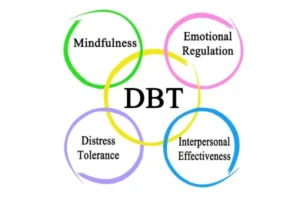 Dialectical Behavior Therapy (DBT) is a type of cognitive‑behavioral therapy that focuses on helping people manage strong emotions, cope with stress, improve relationships, and handle life’s challenges more successfully. It was initially developed by psychologist Dr. Marsha Linehan to help people with extreme emotional sensitivity, but it’s now widely used to treat a variety of conditions. (ColumbiaDoctors)
The term “dialectical” refers to finding a middle ground between two concepts that appear to be contradictory, such as self-acceptance and the pursuit of improvement. This equilibrium is a core principle of DBT.
DBT offers four primary techniques
- Being aware of the present
- Coping with difficult situations without making them worse
- Controlling intense emotions
- Interacting effectively with others and maintaining good connections
These techniques enable better ways to manage stress and feelings.
How DBT Helps with Depression
 If you struggle with depression, DBT teaches skills that can make daily life feel more manageable and hopeful, using the following:
- Enabling you to observe thoughts and feelings without being consumed by them.
- Stopping the pattern of negative thoughts through recognition and appropriate reactions.
- Encouraging small actions that build meaning and purpose.
- Developing greater self-kindness and optimism over time.
Rather than merely managing, DBT teaches you how to progress, even when depression feels intense.
DBT and Anxiety Relief
Anxiety can make it tough to relax, concentrate on what’s happening now, or believe that everything will turn out fine.DBT helps lessen anxiety by:
- Showing you how to practice mindfulness to quiet fast-moving thoughts.
- Providing ways to handle very stressful moments when anxiety peaks.
- Giving you strategies to question and change scary thought habits.
- Helping you feel more confident in dealing with problems.
The result is a more grounded response to worry and fear, rather than avoidance or constant tension.
DBT and Trauma Recovery
 Trauma, whether from a single event or repeated experiences, can create strong emotional effects and reinforce patterns of avoidance, numbness, and intensified stress. DBT supports trauma recovery by:
- Helping you build safety through regulated emotional replies.
- Teaching coping tools before processing difficult memories.
- Helping you handle stress better every day.
- Helping you build better relationships after difficult events.
Even though DBT might not be a complete substitute for therapies made just for trauma, it gives you basic emotional skills that make healing from trauma safer and work better.
What the Research Says About DBT
DBT is among the most widely researched forms of behavioral therapy today. Clinical studies show that it is able to significantly strengthen emotional health for people with a range of challenges:
- A meta‑analysis released in Psychological Medicine demonstrated that DBT helps reduce self‑harm, depression, and emotional dysregulation across several conditions. (ColumbiaDoctors)
- Research also supports DBT’s benefits for people with anxiety symptoms and those facing challenging emotional problems that haven’t improved with traditional therapy. (ColumbiaDoctors)
- A 2020 randomized clinical trial found that DBT adapted for PTSD (DBT‑PTSD) significantly improved trauma symptoms, with participants showing large and significant reductions in PTSD severity compared to another evidence‑based therapy. (JAMA Psychiatry, a peer‑reviewed journal)
This research supports what therapists observe in their daily work: DBT is effective because it provides people with practical skills they can use regularly.
DBT in Our Intensive Outpatient Program (IOP)
 Our Intensive Outpatient Program (IOP) at Anxiety, Trauma & Depression Treatment Centers strongly features Dialectical Behavior Therapy (DBT). This program offers structured, research-supported mental health treatment that is more comprehensive than standard weekly therapy sessions.
Our Intensive Outpatient Program (IOP) is a good fit for people who need more support than weekly therapy alone, but don’t need to stay in a hospital. The program offers:
- Group sessions and exercises to build DBT skills
- Individual therapy meetings with trained experts
- Support for dealing with anxiety, depression, past traumas, and everyday stress
- Flexible scheduling so you can continue with work, school, or family duties
Since DBT is part of a larger treatment strategy, clients can practice their skills in a supportive setting and receive personalized attention tailored to their specific needs.
Who Can Benefit from DBT?
You might benefit from DBT if you:
- Have frequent, overwhelming, strong emotions
- Have trouble with anxiety or depression
- Often feel down or without hope
- Find your relationships difficult or filled with arguments
- Want skills that help you respond differently to stress
Everyone’s path is different, and therapy is never “one size fits all.” But DBT gives you practical, life‑applicable tools that foster long‑term emotional growth.
 Take the Initial Step Toward Healing
If you’re tired of feeling stuck in cycles of anxiety, depression, or overwhelm, know this: you can learn skills that make life appear more manageable and meaningful. To explore how DBT can fit into your mental health care, visit the Intensive Outpatient Programs page and learn more about how our approach supports real, lasting recovery.